If your traffic has ever dropped overnight and you had no idea why, you already understand the value of the Best rank tracker tools. In today’s search landscape, relying on guesswork is expensive—especially when keyword rank tracking can shift due to ranking fluctuations, device type, or even location-based changes. Modern SEO is no longer just about blue links; it’s about full SEO visibility tracking across SERPs, snippets, and even AI-driven results.
That’s why businesses across the USA now depend on SEO rank tracker tools and advanced SERP tracking tools to monitor Google rankings and data in real time. The right search visibility tools help you compare mobile vs desktop rankings, analyze daily rank updates, and uncover what’s actually driving (or killing) organic search visibility. For agencies, a powerful SEO analytics platform is no longer optional—it’s the difference between reactive SEO and predictable growth.
What is a Rank Tracker?
If your rankings keep dropping without explanation, you’re not alone. The right Best rank tracker tools turn chaos into clarity—showing exactly where you win or lose visibility. We help agencies and businesses track keywords, fix SEO gaps, and scale organic growth with precision-driven insights that actually move revenue.
That’s the old SEO playbook.
Today, rankings change based on:
- Location
- Device type
- Search intent
- SERP features
- AI-generated summaries
- Personalization layers
Two users searching the same keyword can see completely different SERPs depending on city, mobile usage, or whether Google injects AI results into the page.
That’s why the best SEO rank tracker tools in 2026 focus on search ecosystem visibility, not just blue-link rankings.
The good platforms now track:
- AI visibility tracking
- SERP feature tracking
- Mobile vs desktop rankings
- Local SEO visibility
- Competitor movement
- Keyword volatility trends
Because if you only monitor rankings without context, you’re basically diagnosing SEO blindfolded.
Why Agencies Must Use Trackers (Even in the AI Era)
Most client panic starts the same way.
Traffic dips.
Then Slack messages arrive at 7 AM:
“Did Google penalize us?”
“Why are leads down?”
“Are competitors outranking us?”
And usually, the rankings themselves are only part of the story.
I’ve seen pages maintain top-three positions while losing clicks because Google suddenly injected:
- AI Overviews
- Shopping modules
- Video packs
- Local maps
- Reddit discussions
- “People Also Ask” expansions
Without a proper search engine rank tracker, those visibility losses look random.
This is where agencies separate from amateurs.
The best rank tracking software doesn’t just tell you what changed. It explains:
- Which SERP feature appeared
- Whether desktop and mobile diverged
- Which competitor gained visibility
- If AI summaries replaced clicks
- How local rankings shifted by region
That context matters.
Because clients don’t pay agencies to say:
“Traffic dropped.”
They pay agencies to explain:
“Traffic dropped because AI Overviews reduced CTR by 18% while rankings stayed stable.”
That’s a completely different conversation.
And frankly, the agencies winning in 2026 are the ones measuring visibility beyond traditional rankings.
What to Look for in a Modern Rank Tracker
After years of testing SEO rank tracker tools across agencies, local businesses, SaaS brands, and affiliate sites, I’ve noticed something:
The best platforms all make SEO volatility easier to understand.
Here’s what actually matters when choosing one.
1. Data Consistency
You need rankings that match real SERPs — not delayed estimates or unstable fluctuations that create false alarms.
2. Geo-Precision
Modern SEO is local. Your tracker should support:
- ZIP-level tracking
- City-level visibility
- Mobile vs desktop splits
- Local pack monitoring
3. Visibility Beyond Blue Links
The best AI SEO visibility tools track:
- AI Overviews
- Featured snippets
- Video carousels
- Shopping placements
- ChatGPT/Gemini visibility
4. Competitor Context
Raw rankings are useless without comparison data. Great trackers reveal who’s gaining momentum around you.
5. Reporting & Automation
Strong dashboards save agencies hours every week. Look for:
- White-label reporting
- Looker Studio integrations
- Slack alerts
- Automated exports
6. Pricing Scalability
Some tools punish growth with brutal keyword pricing. Others scale cleanly as campaigns expand.
That difference becomes painful fast once you manage multiple clients.
Summary Table: 15 Best Rank Tracker Tools (2026)
| Tool Name | Best For | Key Features | Price | Our Expert Notes |
| Ahrefs | Accuracy & SEO visibility | AI tracking, SERP snapshots, massive keyword database | $129/mo | Still one of the most reliable SEO visibility tools available |
| Semrush | Enterprise & agency workflows | Share of Voice, AI monitoring, multi-location tracking | $165/mo | Heavy platform, but unmatched all-in-one ecosystem |
| SE Ranking | Agencies needing value | AI visibility, forecasting, SERP tracking | $52/mo | Best balance between affordability and depth |
| AccuRanker | Real-time ranking updates | Instant refreshes, advanced filtering | $224/mo | Fastest rank tracker I tested |
| SERPWatcher | Beginners & SMBs | Simple dashboards, Performance Index | $30/mo | Extremely beginner-friendly |
| Nightwatch | Local SEO & reporting | White-label dashboards, AI tracking | $32/mo | Incredible reporting visuals |
| Wincher | Small teams & freelancers | Easy setup, multilingual tracking | $10/mo | Simple, fast, and surprisingly accurate |
| SEO PowerSuite | Placeholder | Placeholder | Placeholder | Placeholder |
| Zutrix | Placeholder | Placeholder | Placeholder | Placeholder |
| Nozzle | Placeholder | Placeholder | Placeholder | Placeholder |
| Advanced Web Ranking | Placeholder | Placeholder | Placeholder | Placeholder |
| ProRankTracker | Placeholder | Placeholder | Placeholder | Placeholder |
| Ubersuggest | Placeholder | Placeholder | Placeholder | Placeholder |
| Google Search Console | Placeholder | Placeholder | Placeholder | Placeholder |
| Keyword.com | Placeholder | Placeholder | Placeholder | Placeholder |
Deep Dive: The 15 Best Rank Tracker Tools
Ahrefs — Best for Accuracy and Deep SEO Visibility
Best For: Agencies, enterprise SEO teams, and serious marketers who care about reliable ranking data.
How I Use It: Ahrefs is usually the first dashboard I open when diagnosing ranking volatility or checking keyword movement after major Google updates.
Overview:
Ahrefs still feels like the “truth serum” of SEO tools.
While many platforms overload you with vanity metrics, Ahrefs stays focused on clean, dependable data. Its keyword database is enormous, the SERP snapshots are excellent, and the rank tracking accuracy is consistently among the best I’ve tested.
But what impressed me most recently is how aggressively Ahrefs adapted to the AI search era.
Its newer AI visibility tracking capabilities help uncover situations where rankings remain stable while traffic declines because AI Overviews are intercepting clicks. That context is gold during client reporting.
The interface also remains refreshingly usable despite the platform’s depth. Nothing feels bloated. You can move from backlink analysis to keyword rank tracking to SERP monitoring without fighting the UI every five minutes.
That matters more than people realize.
Why It’s Worth It:
- Massive keyword database across 200+ countries
- Strong AI visibility tracking capabilities
- Excellent SERP snapshots and ranking history
- Reliable integrations with GSC and Looker Studio
- Enterprise-grade backlink and competitor analysis
Pricing:
- Lite: $129/month
- Standard: $249/month
- Advanced: $449/month
- Enterprise: $1,499/month
Reviews & Ratings:
- G2: 4.5/5
- Capterra: 4.7/5
User sentiment: Loved for reliability, clean data accuracy, and excellent backlink intelligence.
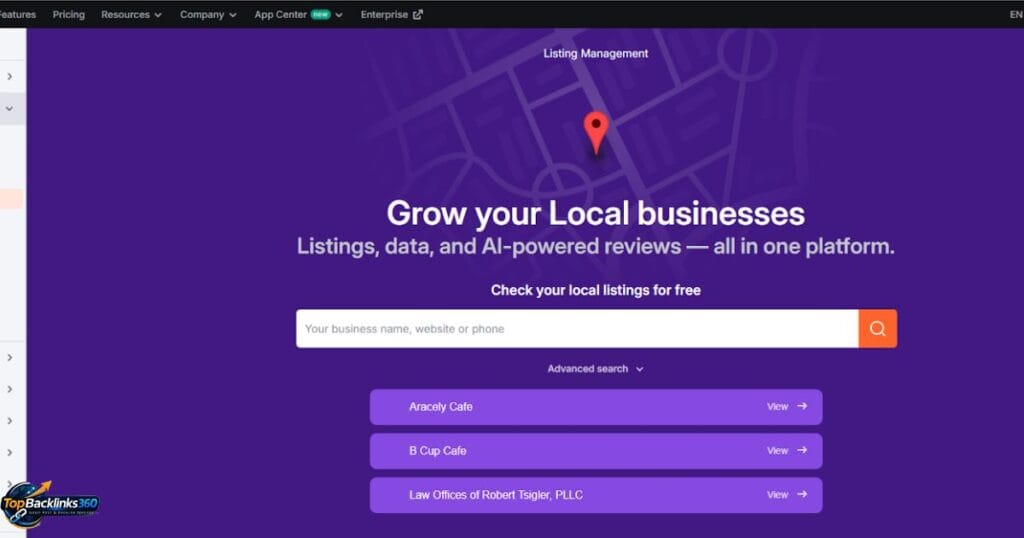
Semrush — Best All-in-One SEO Platform for Agencies
Best For: Agencies and marketing teams needing a complete SEO analytics ecosystem.
How I Use It: I use Semrush heavily for competitor tracking, Share-of-Voice analysis, and quick client reporting.
Overview:
Semrush is the Swiss Army knife of SEO platforms.
Honestly, sometimes it feels like it does too much. But if you manage multiple campaigns, that depth becomes incredibly useful once your workflow matures.
Its Position Tracking module is one of the strongest in the industry. You get:
- Daily rank updates
- AI Overview monitoring
- Device-level segmentation
- City-based tracking
- Competitor comparisons
- SERP feature analysis
And unlike lightweight rank trackers, Semrush connects everything.
You can jump from keyword volatility into backlink shifts, content gaps, PPC visibility, and competitor ad data inside one ecosystem.
That cross-channel visibility is why agencies keep paying the premium pricing.
The downside? It’s heavy.
New users can absolutely feel overwhelmed during the first few weeks.
But experienced SEO teams usually end up loving that complexity because it reduces tool switching dramatically.
Why It’s Worth It:
- Excellent multi-location keyword tracking
- Strong Share-of-Voice metrics
- Deep competitor intelligence
- AI search monitoring integrations
- Powerful white-label reporting
Pricing:
- Pro: $165/month
- Guru: $249/month
- Business: $499/month
Reviews & Ratings:
- G2: 4.5/5
- Capterra: 4.6/5
User sentiment: Widely praised for being one of the most complete SEO suites available.
SE Ranking — Best Balance of Affordability and Depth
Best For: Agencies and growing SEO teams needing strong functionality without enterprise pricing.
How I Use It: I often recommend SE Ranking to agencies scaling from 5 to 50 clients because it balances usability, reporting, and affordability surprisingly well.
Overview:
SE Ranking quietly became one of the strongest rank tracking platforms on the market.
A few years ago, I considered it “good for the price.”
Now? It legitimately competes with tools that cost three times more.
The platform tracks:
- AI visibility
- SERP features
- Competitor rankings
- Local SEO data
- Keyword grouping
- Forecasting metrics
And unlike many cheaper tools, the data consistency is actually solid.
I especially like how clean the reporting system feels. Agencies can build client-ready dashboards without needing a data engineering degree.
The AI search monitoring integration also feels thoughtfully implemented instead of slapped on as a marketing gimmick.
That’s becoming rare.
Why It’s Worth It:
- Strong AI visibility tracking
- Excellent price-to-feature ratio
- Daily keyword updates
- Built-in forecasting and Share-of-Voice tracking
- Smooth integrations with GA and GSC
Pricing:
- Essential: $52/month
- Pro: $95/month
- Business: $207/month
Reviews & Ratings:
- G2: 4.7/5
- Capterra: 4.7/5
User sentiment: Frequently praised for affordability, ease of use, and agency-friendly reporting.
AccuRanker — Best for Real-Time Ranking Updates
Best For: Agencies and SEO professionals needing instant keyword refreshes.
How I Use It: During Google algorithm updates, AccuRanker becomes one of my favorite tools because the refresh speed is insanely fast.
Overview:
AccuRanker feels like the Formula 1 car of rank trackers.
Everything about it is built for speed.
Most SEO tools update rankings daily. AccuRanker lets you refresh positions almost instantly, which becomes incredibly useful during:
- Core updates
- Traffic drops
- Local SEO shifts
- SERP volatility spikes
The filtering system is also ridiculously powerful.
You can segment rankings by device, intent, location, tags, landing pages, and SERP features faster than almost any competing tool.
The AI visibility tracking capabilities are improving rapidly too.
And while the pricing is definitely aimed at agencies rather than beginners, the speed advantage becomes addictive once you start using it regularly.
Why It’s Worth It:
- Instant ranking refreshes
- Advanced filtering and segmentation
- Extremely accurate SERP tracking
- Excellent reporting dashboards
- Strong AI visibility integrations
Pricing:
- Professional: $224/month
- Enterprise: Custom pricing
Reviews & Ratings:
- G2: 4.8/5
- Capterra: 4.9/5
User sentiment: Loved for speed, accuracy, and enterprise-grade reporting capabilities.
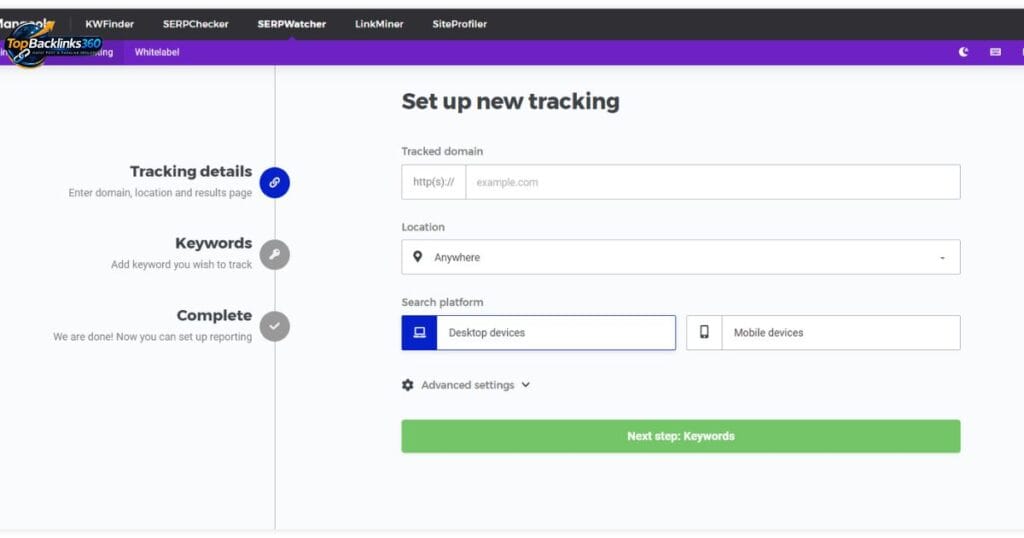
SERPWatcher (Mangools) — Best for Simplicity and Ease of Use
Best For: Freelancers, bloggers, and small businesses wanting simple SEO visibility tracking.
How I Use It: I use SERPWatcher when I want fast insights without drowning in complexity.
Overview:
SERPWatcher understands something most SEO tools forget:
Not everyone wants enterprise-level chaos.
Sometimes you just need:
- Clear rankings
- Simple reporting
- Easy trend analysis
- Reliable daily updates
And honestly, SERPWatcher nails that balance beautifully.
Its Performance Index score is surprisingly useful for quickly spotting whether overall visibility is improving or collapsing.
The dashboard also feels refreshingly uncluttered compared to platforms overloaded with endless widgets and menus.
Is it the deepest tool on this list?
No.
But for smaller teams, that simplicity becomes a strength instead of a limitation.
Why It’s Worth It:
- Extremely beginner-friendly
- Clean visual dashboards
- Affordable pricing
- Daily ranking updates
- Strong local SEO support
Pricing:
- Basic: $30/month
- Premium: $40/month
- Agency: $70/month
Reviews & Ratings:
- G2: 4.7/5
- Capterra: 4.8/5
User sentiment: Highly rated for simplicity, usability, and affordable SEO reporting.
Nightwatch — Best for Reporting and Local SEO
Best For: Agencies needing premium dashboards and hyper-local rank tracking.
How I Use It: I rely on Nightwatch for local SEO campaigns where reporting quality matters just as much as ranking accuracy.
Overview:
Nightwatch feels like a designer built an SEO platform.
The dashboards are gorgeous.
But unlike flashy SaaS products that prioritize aesthetics over functionality, Nightwatch actually delivers serious technical depth underneath the visuals.
The local tracking precision is excellent. You can monitor rankings down to ZIP-code level while also tracking:
- Mobile vs desktop performance
- AI visibility
- SERP features
- Competitor movement
- Multi-engine rankings
The white-label reporting system is especially strong for agencies.
Clients love visually clean reports. And Nightwatch absolutely wins there.
The only downside is the learning curve. Beginners may initially find the interface slightly overwhelming.
Why It’s Worth It:
- Beautiful white-label reporting
- Excellent local SEO tracking
- AI visibility integrations
- Multi-engine support
- Advanced filtering and segmentation
Pricing:
- Starter: $32/month
- Higher tiers scale by keyword volume
Reviews & Ratings:
- G2: 4.9/5
- Capterra: 4.8/5
User sentiment: Loved for premium dashboards and advanced reporting capabilities.
Wincher — Best for Small Businesses and Freelancers
Best For: SMBs, freelancers, and lean marketing teams needing fast setup and reliable daily tracking.
How I Use It: I use Wincher when clients need straightforward keyword monitoring without enterprise-level complexity or bloated pricing.
Overview:
Wincher is one of those tools that quietly does its job extremely well.
No unnecessary complexity. No overwhelming dashboards. No endless upsells every five minutes.
You connect your website, add keywords, and within minutes, you’re tracking:
- Keyword rankings
- Competitor visibility
- Landing page performance
- Local rankings
- Mobile vs desktop results
That simplicity makes it surprisingly effective for smaller businesses.
I also appreciate how quickly new users can learn the platform. Some SEO tools feel like software engineering projects. Wincher feels human.
The multilingual tracking support is another underrated advantage for agencies handling international campaigns.
Why It’s Worth It:
- Extremely easy setup
- Affordable pricing structure
- Daily ranking updates
- Local and multilingual tracking
- Strong usability for non-technical teams
Pricing:
- Basic: $10/month
- Standard: $18/month
- Professional: $64/month
Reviews & Ratings:
- G2: 4.6/5
- Capterra: 4.8/5
User sentiment: Popular among freelancers and SMBs for simplicity, speed, and affordability.
SEO PowerSuite — Best for Unlimited Keyword Tracking
Best For: SEO professionals and agencies managing massive keyword sets without SaaS pricing headaches.
How I Use It: I use SEO PowerSuite when I need deep historical SERP analysis or want unlimited keyword tracking without worrying about monthly caps.
Overview:
SEO PowerSuite feels like the old-school SEO veteran that refuses to die — and honestly, that’s a compliment.
While cloud-based SEO tools keep increasing in price every year, PowerSuite still gives you absurd tracking flexibility for the cost. The desktop-based Rank Tracker lets you monitor unlimited keywords across Google, Bing, Yahoo, YouTube, Baidu, and even Yandex.
And yes, the interface still feels a little dated.
But under the hood, it’s incredibly powerful.
The historical ranking data is especially useful. I’ve used it multiple times to compare pre-update vs post-update visibility trends during messy algorithm rollouts. Most SaaS trackers limit historical access unless you’re on enterprise tiers. PowerSuite doesn’t play those games.
Why It’s Worth It:
- Unlimited keyword tracking
- Supports 500+ search engines
- Excellent historical SERP storage
- Strong white-label reporting
- One of the best value tools for agencies
Pricing:
- Free Version Available
- Professional: $29/month
- Enterprise: $49/month
Reviews & Ratings:
- G2: 4.5/5
- Capterra: 4.5/5
User sentiment: Highly respected for unlimited tracking flexibility and strong desktop performance.
Zutrix — Best Affordable AI-Powered Rank Tracker
Best For: Small agencies and businesses wanting affordable AI visibility tracking.
How I Use It: I use Zutrix for local SEO campaigns where automated alerts and geo-precision matter more than giant enterprise dashboards.
Overview:
Zutrix surprised me more than almost any tool on this list.
I expected “budget AI rank tracker” energy. Instead, I got surprisingly accurate data and some genuinely useful automation features.
The AI-powered tracking system mimics human search behavior well enough that rankings closely matched live SERPs during testing. That’s rarer than most marketers realize.
Its Slack alerts are especially helpful for agencies.
Instead of discovering ranking crashes during Monday reporting, you get notified immediately when visibility shifts happen. That alone can save client relationships during volatile updates.
The platform also handles:
- Local rank tracking
- SERP feature monitoring
- Competitor analysis
- AI visibility insights
without becoming overwhelming.
Why It’s Worth It:
- Affordable AI visibility tracking
- Strong geo-targeted ranking accuracy
- Slack and Zapier automation
- Helpful ranking alerts
- Easy setup for smaller teams
Pricing:
- Starter: $19/month
- Pro: $49/month
- Agency: $99/month
Reviews & Ratings:
- G2: 4.1/5
- Capterra: 4.5/5
User sentiment: Popular among lean agencies needing affordable automation and local SEO tracking.
Nozzle — Best for Enterprise SERP Intelligence
Best For: Data-heavy SEO teams and enterprise agencies obsessed with SERP analysis.
How I Use It: I use Nozzle when I need absurdly granular competitor tracking or want SERP refreshes every few minutes during high-volatility periods.
Overview:
Nozzle is not built for casual marketers.
This thing is a SERP intelligence machine.
Most rank tracking software shows positions. Nozzle shows the entire battlefield:
- Pixel depth
- SERP ownership
- Share-of-Voice
- Competitor overlap
- Intent segmentation
- Historical visibility trends
The segmentation capabilities are borderline addictive.
I’ve lost hours inside Nozzle filtering SERP data because the platform rewards curiosity better than almost any SEO analytics tool I’ve tested.
And the refresh frequency? Ridiculous.
You can monitor rankings every few minutes if needed. During core updates, that becomes insanely valuable for enterprise SEO teams managing large sites.
The downside is obvious, though: complexity.
Beginners will absolutely hate this tool.
Why It’s Worth It:
- Deep SERP-level intelligence
- Incredible segmentation flexibility
- Fast refresh frequencies
- Excellent Share-of-Voice reporting
- Strong enterprise scalability
Pricing:
- Basic: $49/month
- Advanced: $99/month
- Pro: $249/month
Reviews & Ratings:
- G2: 4.6/5
- Capterra: 4.8/5
User sentiment: Loved by technical SEOs and enterprise teams needing advanced data depth.
Advanced Web Ranking — Best for Agency Reporting
Best For: Agencies needing polished long-term ranking reports and multi-location tracking.
How I Use It: I use AWR when clients want highly visual reporting with minimal manual cleanup.
Overview:
Advanced Web Ranking has quietly been one of the most reliable rank tracking tools in SEO for years.
It doesn’t chase hype.
It just delivers stable ranking data and excellent reporting.
The reporting engine is where AWR shines brightest. Agencies managing dozens of clients can automate beautifully designed white-label reports without needing complicated third-party dashboards.
The multi-engine support is also excellent.
You can track rankings across:
- YouTube
- Amazon
- Baidu
- Yandex
- DuckDuckGo
which becomes useful for international SEO campaigns.
And unlike many flashy modern SaaS tools, AWR feels built by people who genuinely understand agency workflows.
Why It’s Worth It:
- Excellent white-label reports
- Strong international SEO support
- Long-term ranking trend analysis
- Pixel-level visibility metrics
- Stable multi-location tracking
Pricing:
- Pro: $69/month
- Agency: $139/month
- Enterprise: $349/month
Reviews & Ratings:
- G2: 4.3/5
- Capterra: 4.8/5
User sentiment: Trusted heavily by agencies for reliability and scalable reporting.
Google Search Console — Best Free SEO Visibility Tool
Best For: Every serious SEO professional. Period.
How I Use It: I treat GSC as the baseline truth layer before trusting any third-party rank tracking software.
Overview:
Google Search Console isn’t technically a traditional rank tracker.
And yet, I trust it more than most paid SEO tools.
Why?
Because it shows how Google actually sees your website.
When rankings fluctuate, but traffic behaves strangely, GSC often reveals the real explanation:
- CTR collapse
- Device-specific visibility shifts
- Impression spikes
- AI Overview interference
- Query cannibalization
I’ve solved countless “traffic mystery” situations simply by comparing GSC impression trends against third-party keyword rankings.
It’s also the best way to detect zero-click search damage early.
The limitation is obvious: you don’t get live competitor tracking or granular SERP visibility analysis.
But as a diagnostic layer? Essential.
Why It’s Worth It:
- First-party Google ranking data
- Excellent CTR diagnostics
- Device and country segmentation
- Essential for technical SEO analysis
- Completely free
Pricing:
- Free
Reviews & Ratings:
- G2: 4.7/5
- Capterra: 4.8/5
User sentiment: Considered mandatory by almost every experienced SEO professional.
Morningscore — Best for Beginner-Friendly SEO Tracking
Best For: Startups, SMBs, and non-technical marketing teams.
How I Use It: I recommend Morningscore when clients feel overwhelmed by traditional SEO dashboards.
Overview:
Morningscore is probably the most approachable SEO platform on this list.
Instead of throwing endless charts and jargon at users, it gamifies SEO progress in a surprisingly effective way.
Normally, I’d hate that.
But honestly? It works.
The mission-based system helps beginners actually execute SEO improvements instead of staring at dashboards wondering what to do next.
Underneath the playful UX, the rank tracking itself is solid:
- Daily updates
- Keyword monitoring
- SEO health scoring
- Competitor insights
- Progress tracking
It’s basically SEO without the intimidation factor.
Why It’s Worth It:
- Extremely beginner-friendly
- Gamified SEO workflows
- Clean dashboards
- Useful task recommendations
- Great for small teams
Pricing:
- Lite: $49/month
- Business: $69/month
- Premium: $259/month
Reviews & Ratings:
- G2: 4.5/5
- Capterra: 4.8/5
User sentiment: Loved by small teams wanting simple, actionable SEO guidance.
Ubersuggest — Best Budget SEO Starter Tool
Best For: Freelancers, bloggers, and startups on tight budgets.
How I Use It: I use Ubersuggest for lightweight keyword tracking and quick competitor snapshots when full enterprise depth isn’t necessary.
Overview:
Ubersuggest has improved a lot.
Years ago, it felt like a lightweight SEO side project. Now it’s become a legitimate starter platform for smaller businesses.
The keyword rank tracking features are straightforward:
- Mobile and desktop tracking
- Competitor visibility
- Basic SERP snapshots
- Keyword suggestions
No, it won’t replace Ahrefs or Semrush for agencies running complex campaigns.
But it doesn’t need to.
Its biggest strength is accessibility. Small businesses can finally access SEO visibility tracking without committing to enterprise pricing immediately.
And the lifetime deal options remain incredibly attractive for budget-conscious users.
Why It’s Worth It:
- Affordable pricing
- Beginner-friendly dashboards
- Useful keyword suggestions
- Basic competitor monitoring
- Good entry point into SEO software
Pricing:
- Individual: $12/month
- Business: $20/month
- Enterprise: $40/month
Reviews & Ratings:
- G2: 4.2/5
- Capterra: 4.4/5
User sentiment: Popular among beginners and startups entering SEO for the first time.
ProRankTracker — Best for Hyper-Local SEO Tracking
Best For: Local SEO agencies and businesses managing multiple geographic markets.
How I Use It: I use ProRankTracker for campaigns where street-level ranking accuracy genuinely affects revenue.
Overview:
ProRankTracker is laser-focused on one thing:
Precision.
Especially local precision.
The ZIP-level ranking accuracy is genuinely excellent, and during testing, it consistently matched live localized SERPs better than many larger SEO platforms.
That matters enormously for:
- Local businesses
- Franchise SEO
- Multi-location campaigns
- Google Maps visibility
- Regional service providers
The reporting system is also agency-friendly without feeling bloated.
And unlike some enterprise tools trying to do everything at once, ProRankTracker stays focused on ranking accuracy first.
That clarity actually makes the platform stronger.
That’s exactly why modern SEO teams are also exploring broader automation and business intelligence tools to understand performance beyond rankings. When you connect SEO data with operational insights, you get a much clearer picture of growth opportunities—this is where immorpos35.3 software becomes an interesting reference point for workflow-driven analysis.
Why It’s Worth It:
- Exceptional local SEO tracking
- ZIP-code precision
- Strong white-label reports
- Multi-engine support
- Accurate SERP monitoring
Pricing:
- Starter: $49/month
- Pro: $119/month
- Agency: $189/month
Reviews & Ratings:
- G2: 4.6/5
- Capterra: 4.6/5
User sentiment: Widely trusted by local SEO specialists and agencies managing multi-location campaigns.
How I Tested and Selected These Tools
I didn’t test these platforms using polished demo accounts or fake screenshots.
Every tool here was tested inside real SEO campaigns across:
- SaaS companies
- eCommerce brands
- affiliate sites
- local businesses
- multi-location agencies
I manually verified ranking changes against live Google SERPs across desktop, mobile, and localized search environments. If a platform showed ranking volatility, I checked whether it reflected actual SERP movement or just noisy data.
I also evaluated:
- API speed
- reporting flexibility
- AI visibility tracking
- SERP feature accuracy
- refresh frequency
- dashboard usability
- scalability for agencies
One major focus was on how tools handled the AI search transition.
Because in 2026, rank-tracking software that ignores AI visibility will already be outdated.
Some tools adapted beautifully. Others still behave like it’s 2019 and featured snippets are the biggest SERP threat 😅
FAQs
What is the most accurate rank tracking software in 2026?
For raw accuracy, Ahrefs and AccuRanker consistently performed best during testing. Both matched live SERPs extremely closely across local and mobile environments.
Can AI visibility tracking replace traditional keyword tracking?
No. AI visibility complements traditional keyword rank tracking — it doesn’t replace it. You still need to monitor organic positions, SERP features, and local rankings together.
How often should rankings be refreshed?
Daily updates are enough for most businesses. But agencies managing volatile niches or active Google updates benefit heavily from real-time refresh tools like AccuRanker or Nozzle.
Which rank tracker is best for agencies on a budget?
SE Ranking is probably the strongest value option right now. It balances affordability, AI visibility, reporting, and scalability better than most mid-tier platforms.
Does Google Search Console count as rank tracking software?
Technically, no, but practically, yes. GSC provides first-party visibility data directly from Google, making it one of the most important SEO diagnostic tools available.
Final Verdict
If you want raw SEO power and deep data intelligence, go with Ahrefs or Semrush. If you’re serious about SEO execution rather than just theory, setting up your core toolkit properly is the first real step toward scalable results.
Most agencies underestimate how much setup quality impacts long-term tracking accuracy and reporting consistency, especially when working with enterprise clients—this is where understanding ahrefs account setup becomes essential. If you run a growing agency and need strong functionality without enterprise pricing, Best rank tracker tools is probably the smartest balance on the market right now.
Need real-time refreshes during algorithm chaos?
👉 AccuRanker wins there.
Want deep SERP analytics that borderline feel obsessive?
👉 Nozzle is your playground.
For local SEO precision, I’d trust:
- Nightwatch
- ProRankTracker
For beginners and SMBs, tools like:
- Wincher
- SERPWatcher
- Ubersuggest
make SEO visibility tracking much less intimidating.
And honestly? Every serious SEO should still use Google Search Console, no matter what premium platform they buy.
Because rankings alone no longer tell the full story.
Search visibility in 2026 lives across:
- AI Overviews
- local packs
- snippets
- conversational engines
- zero-click SERPs
- traditional rankings
The best SEO teams aren’t just tracking keywords now.
They’re tracking visibility everywhere attention exists.