If you are working in SEO, you already know one painful truth: messy keywords = messy rankings. This is where keyword grouping software in USA becomes a game-changer. Before you even start using keyword clustering tools, it helps to understand how SEO performance is affected by mobile behavior and search experience.
For example, optimizing site structure and traffic flow with strong mobile-focused strategies can significantly improve how your keyword clusters perform in real search results.
Read this guide to understand how mobile SEO impacts rankings and user engagement in modern search environments.
Instead of sorting keywords manually in spreadsheets, modern SEO teams use smart tools to automatically cluster keywords based on search behavior. These tools help you build clean content structures, avoid keyword cannibalization, and plan pages that actually rank.
In this guide, you will learn how keyword grouping works, which tools are best in 2026, and how to choose the right one based on your goals, budget, and SEO strategy.
Why Keyword Grouping Matters More Than Ever in 2026
Search engines are no longer matching pages to single keywords. Instead, they understand topics and intent.
That means one page can rank for dozens (or even hundreds) of related keywords if they are grouped correctly.
This is why keyword grouping tools are now essential for modern SEO.
The real problem with manual keyword sorting
Most beginners still use Excel sheets. But this creates serious issues:
- You group keywords based on similarity, not search intent
- Multiple pages end up targeting the same keywords
- Google sees your site as repetitive (keyword cannibalization)
- Content planning becomes slow and confusing
How keyword grouping tools solve it
Modern keyword grouping software in USA uses SERP data and clustering logic to:
- Analyze top-ranking pages in Google
- Group keywords that share similar ranking URLs
- Build topic-based clusters instead of random lists
- Help you create a clean content roadmap
This means you stop guessing and start building pages exactly the way Google understands topics.
How Keyword Clustering Actually Works (Step-by-Step)
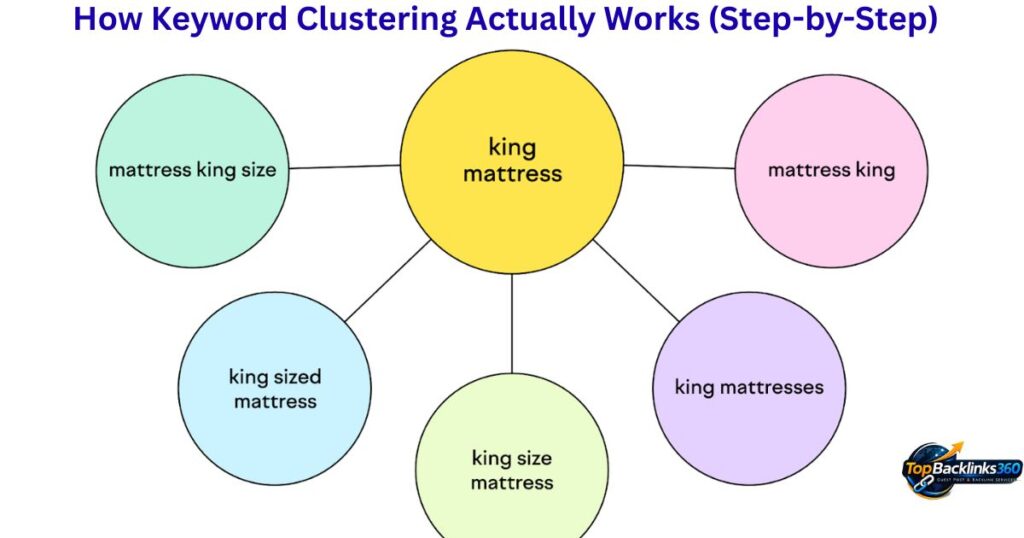
To understand keyword grouping, you need to know what happens behind the scenes.
Step 1: Collect keyword data
You upload keywords from tools like Ahrefs, Semrush, or Google Search Console.
Step 2: SERP analysis
The tool checks Google results for each keyword.
Step 3: URL overlap detection
If multiple keywords show the same ranking URLs, they are grouped.
Step 4: Intent validation
Advanced tools label whether the cluster is:
- Informational
- Commercial
- Transactional
Step 5: Final content map
You get structured clusters like:
- One page = one topic cluster
- Multiple keywords = one content idea
👉 Example:
Instead of creating 5 pages for similar keywords like:
- “SEO keyword tools”
- “keyword clustering tools”
- “best keyword grouping software”
You create ONE strong page that targets all of them.
SERP Overlap vs Semantic Clustering (Simple Explanation)
Not all keyword grouping software works the same way.
SERP-based clustering
This method checks Google results.
How it works:
If two keywords rank similar pages → they belong together.
Best for:
- SEO agencies
- Competitive niches
- Accurate ranking strategies
Semantic clustering (AI-based)
This method uses language meaning.
How it works:
It groups keywords based on similarity in wording and context.
Best for:
- Quick content planning
- Low-competition niches
- Early-stage websites
Key difference
SERP-based tools = Google reality
Semantic tools = language similarity
For serious SEO, SERP-based clustering is usually more accurate.
Best Keyword Grouping Software in USA (2026 Comparison)
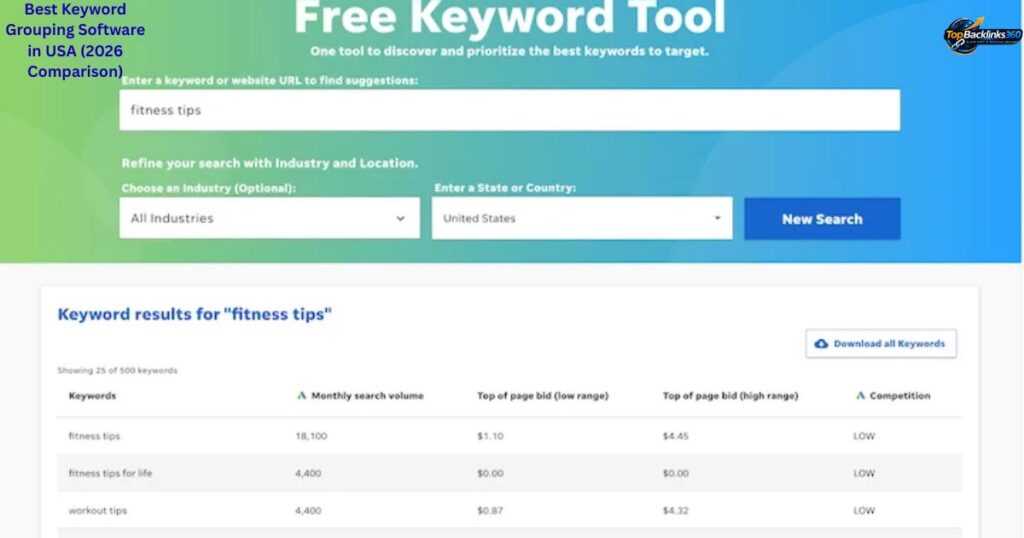
Here are the most reliable tools used by SEO professionals, agencies, and content teams.
Keyword Insights
One of the most accurate SERP-based clustering tools.
Best for: Agencies and SEO teams
Key strengths:
- Real-time SERP clustering
- Automatic intent labeling
- Content brief generation
👉 Ideal when you want clustering + content planning in one workflow.
KeyClusters
A simple, no-frills clustering tool.
Best for: Freelancers and consultants
Key strengths:
- Clean CSV output
- Pay-as-you-go pricing
- No subscription lock-in
👉 Great if you only need raw clustering data.
Keyword Cupid
A visual keyword clustering tool.
Best for: Strategy planning and presentations
Key strengths:
- Mind map visualization
- Large dataset handling
- SEO structure planning
👉 Perfect for client reporting and content architecture.
Semrush Keyword Strategy Builder
Part of the Semrush ecosystem.
Best for: Existing Semrush users
Key strengths:
- Built-in keyword database
- Direct integration with SEO tools
- Content workflow connection
👉 Best if your SEO system already runs on Semrush.
Serpstat Keyword Clustering
A scalable clustering solution.
Best for: Large SEO campaigns
Key strengths:
- Up to 50,000 keywords per run
- Adjustable clustering strength
- Multi-region support
SE Ranking Keyword Grouper
Flexible and agency-friendly tool.
Best for: Local SEO and agencies
Key strengths:
- Accuracy slider control
- Rank tracking integration
- White-label reporting
Topvisor
A powerful tool for technical SEO workflows.
Best for: Advanced SEOs and API users
Key strengths:
- Soft/hard clustering modes
- API integration
- Re-clustering at low cost
WriterZen
All-in-one content planning tool.
Best for: Content teams
Key strengths:
- Keyword clustering + briefs
- Collaboration features
- One-time payment option
Thruuu
Advanced SERP analysis tool.
Best for: Content strategists
Key strengths:
- AI Overview analysis
- SERP feature clustering
- Content gap mapping
SpySERP
Affordable clustering + tracking tool.
Best for: Freelancers and small agencies
Key strengths:
- Cluster-level rank tracking
- Free plan available
- API access
Surfer SEO Content Planner
Content-focused clustering tool.
Best for: Surfer SEO users
Key strengths:
- Direct content editor integration
- SEO optimization suggestions
- Topic clustering workflow
Free vs Paid Keyword Grouping Tools
Understanding pricing models helps you choose smarter.
Free tools
- SpySERP (limited free plan)
- Basic clustering in SEO tools
Pros:
- No cost
- Good for beginners
Cons:
- Limited accuracy
- Small datasets only
Paid tools
Most advanced clustering platforms fall here.
Pros:
- High accuracy SERP-based clustering
- Large keyword capacity
- Advanced features like briefs and APIs
Cons:
- Can be expensive at scale
👉 If you’re serious about SEO growth, paid tools are usually worth it.
When You Should NOT Use Keyword Clustering Tools
Keyword grouping is powerful, but not always needed.
Avoid it when:
- You only have 10–20 keywords
- You are doing very simple blog content
- You are in the early testing phase of a niche
- You don’t plan to scale SEO content
In these cases, manual grouping is enough.
Case Study: Before vs After Keyword Grouping
Before clustering
A website targeting “SEO tools” was created:
- 12 separate pages for similar keywords
- High keyword overlap
- Weak rankings due to cannibalization
After clustering
Using keyword grouping software:
- Keywords were grouped into 3 main clusters
- 3 strong pillar pages were created
- Internal linking was added between clusters
Result
- Better ranking stability
- Increased organic traffic
- Reduced content duplication issues
Best Keyword Grouping Strategy for SEO in 2026
If you want the best results, follow this workflow:
- Collect 500–5000 keywords
Once you start collecting keywords at scale, the next challenge is using the right SEO tools to extract and analyze data properly. Learning how professional SEOs use platforms like Ahrefs can help you understand keyword difficulty, search volume, and competitor gaps before clustering your data.
This beginner-friendly breakdown shows exactly how to set up and use Ahrefs for keyword research the right way.
- Use SERP-based clustering tools
- Build topic clusters (not single keywords)
- Create pillar + supporting pages
- Add strong internal linking
This is how modern SEO content systems are built.
FAQ: Keyword Grouping Software in USA
What is keyword grouping in SEO?
It is the process of organizing keywords into clusters based on search intent and Google rankings.
Is keyword clustering necessary for SEO in 2026?
Yes, especially for competitive niches. It helps prevent keyword cannibalization and improves topical authority.
Which tool is best for beginners?
KeyClusters and SpySERP are beginner-friendly due to simple interfaces and low cost.
Are SERP-based tools better than AI clustering?
Yes, SERP-based tools reflect real Google ranking behavior, making them more accurate.
How many keywords should be grouped per page?
It depends, but usually 5–30 related keywords per page works well.
Does keyword clustering prevent keyword cannibalization?
Yes, it helps ensure each page targets a unique keyword cluster instead of competing with itself.
Final Thoughts
Keyword clustering is no longer optional in modern SEO; it is a core strategy.
If you want to scale content, rank faster, and avoid wasted effort, using keyword grouping software in USA is one of the smartest moves you can make in 2026.
Start small, choose the right tool, and build your content around clusters, not random keywords.